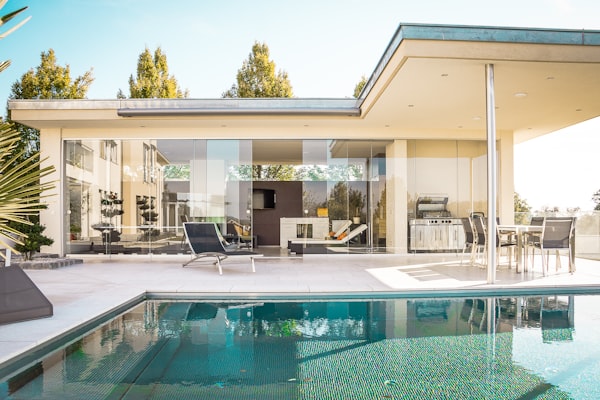

Dubai enters 2025 from a position of extraordinary strength. After several consecutive record-breaking years, the emirate's property market has matured from a cyclical, speculation-driven arena into one of the most closely watched investment destinations on earth. For the discerning buyer, the questions are no longer whether Dubai deserves a place in a global portfolio, but where and on what terms. Below, we set out the trends we believe will define the year — and the strategic implications for private capital.
A Market Underpinned by Fundamentals
The narrative around Dubai has changed. Where earlier cycles were fuelled largely by sentiment and easy credit, today's momentum rests on genuine structural advantages: sustained population growth, world-leading infrastructure, a stable dirham pegged to the US dollar, and a regulatory framework that has matured considerably under the Dubai Land Department and RERA.
Crucially, Dubai remains one of the few global cities where residential property carries 0% annual property tax and 0% capital gains tax. The principal transactional cost is the one-off 4% DLD transfer fee. For an international investor accustomed to the frictional taxes of London, New York or Singapore, the arithmetic is compelling — and it is this arithmetic, more than any marketing campaign, that continues to draw global capital.
The Off-Plan Surge Continues — With Nuance
Off-plan sales have accounted for a growing share of total transaction volume, and 2025 will be no exception. Developers continue to offer attractive payment plans, often structured 60/40 or even 50/50 across the construction period, allowing buyers to spread capital commitments over several years.
However, the sophisticated buyer should approach off-plan selectively. Our guidance to clients rests on three tests:
- Developer track record — completion history and build quality matter more than a glossy brochure.
- Location fundamentals — proximity to established infrastructure and genuine end-user demand.
- Escrow protection — confirming that payments are ring-fenced in a RERA-regulated escrow account.
The best off-plan opportunities are not the cheapest entry points; they are the assets where the delivered product will command a premium in a mature secondary market.
Prime and Super-Prime Lead the Way
The strongest price appreciation continues to concentrate at the top of the market. Waterfront and branded residences on Palm Jumeirah, villas in Emirates Hills, and trophy penthouses along the Dubai Marina and Downtown corridors have set successive records. Limited supply of genuinely irreplaceable assets, combined with an influx of ultra-high-net-worth residents relocating to the emirate, has created persistent scarcity at the peak.
For families and long-term residents, established freehold communities such as Dubai Hills Estate and Arabian Ranches continue to deliver both lifestyle and resilient value.
Yields Remain Globally Competitive
Even as capital values have risen, Dubai's rental market has kept pace. Gross rental yields of 6–8% remain achievable across many communities — figures that comfortably outperform prime London or prime central New York, where yields of 2–3% are the norm. Strong tenant demand, driven by continued net inward migration, supports both income and occupancy.
Sustainability and the Flight to Quality
2025 marks a decisive shift toward sustainable, well-designed developments. Buyers increasingly reward energy efficiency, green certification, generous landscaping and genuine community amenities. Master-developers are responding with lower-density, higher-specification schemes. We expect this "flight to quality" to widen the value gap between thoughtfully designed communities and commodity product.
What This Means for Buyers
Our counsel for 2025 is one of disciplined optimism. The macro case for Dubai is intact and, in our view, strengthening. But a rising market rewards selectivity, not indiscriminate buying. The right asset — in the right location, from the right developer, acquired on the right terms — will continue to outperform. That is precisely the judgement a private advisor exists to provide.